
AI Search Engine Experts
The Future of Medical & Dental Marketing
Introduction: The Day Traditional SEO Died
For the last twenty years, marketing for doctors and dentists was relatively simple. You picked a few keywords like “best cardiologist” or “Invisalign near me,” put them on your website, got a few backlinks, and waited for the phone to ring.
That era is over.
Google has fundamentally changed. With the introduction of sophisticated AI models like BERT, MUM, and the new Search Generative Experience (SGE), Google no longer just matches keywords. It tries to understand human intent.
Patients are no longer searching in simple phrases. They are asking complex, conversational questions to their phones, smart speakers, and AI chatbots. They are asking things like: “What is the best, least painful treatment for receding gums if I have sensitive teeth?”
Traditional SEO cannot answer that question. It doesn’t know how to connect those concepts.
If your marketing agency is still relying on tactics from 2015, your practice is actively becoming invisible to the modern patient. You need more than just an SEO specialist. You need an AI Search Engine Expert.
At Zevi Digital, we saw this shift coming years ago. We pivoted from traditional SEO to AI-driven search strategies. We use advanced data modeling, natural language processing, and predictive analytics to ensure your medical or dental practice doesn’t just survive the AI revolution—but dominates it.
This guide explains what AI search marketing really means for healthcare, why old methods are failing, and how our AI-enhanced Zevi Patient Acquisition Protocol™ (Z-PAP) secures your future.
What Is AI Search Engine Marketing in Healthcare?
Many doctors hear “AI” and think of robots or generic ChatGPT articles. That is not what we do.
AI Search Engine Marketing is the process of using machine learning and big data to understand exactly what a prospective patient is thinking before they even finish typing their search.
It moves beyond “what” they are searching for (keywords) and focuses on “why” they are searching (intent).
In the past, Google was like a library card catalog. It just looked for matching words on a card. Today, Google is like a genius research librarian who has read every medical textbook and understands the nuance of every patient’s unique situation.
The Core Components of Our AI Strategy:
Natural Language Processing (NLP): Optimizing your content so computers can understand it as easily as humans do.
Predictive Analytics: Using data to guess where market demand will be in 3 months, so you are ready before your competitors.
Semantic Search Optimization: Connecting topics on your website so Google understands your complete expertise, not just individual procedures.
Automated Insight Gathering: Analyzing thousands of data points from local competitors instantly to find their weaknesses.
Why Traditional Medical & Dental SEO Is No Longer Enough?
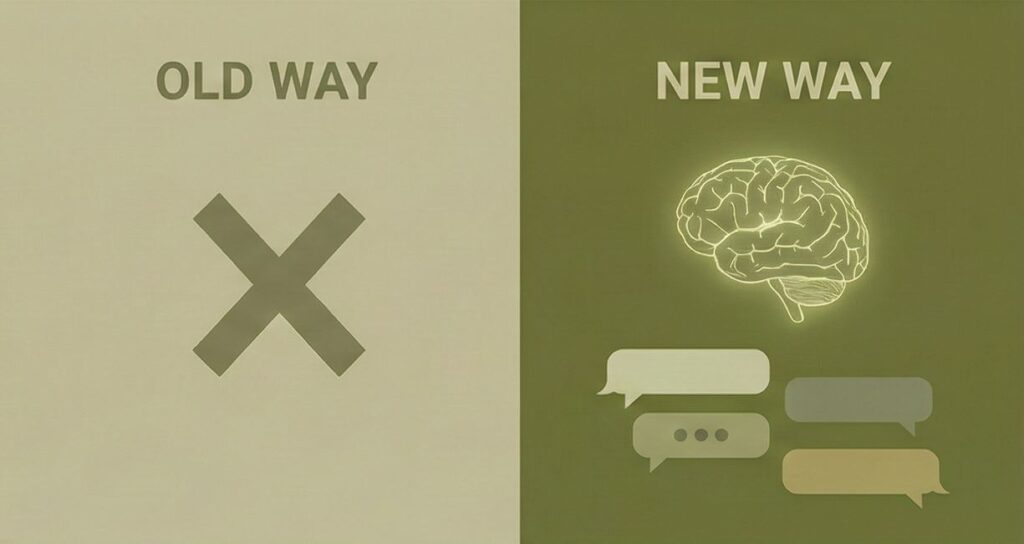
The gap between traditional agencies and AI-expert agencies is widening fast. Here is why the old way is failing medical practices.
1. The Rise of Voice Search and Conversational Queries
Over 50% of searches now happen on mobile, and many are voice-activated. People don’t speak in keywords. They speak in full sentences.
Old SEO: Targets “pediatric dentist.”
Patient Voice Search: “Siri, where can I find a dentist for my autistic child who is scared of needles?”
If your website content isn’t structured to answer that complex, multi-layered question directly, Google’s AI will skip you and serve an answer from a practice that has optimized for that level of detail.
2. Google’s Search Generative Experience (SGE)
This is the biggest change to Google in its history. Instead of just giving a list of 10 blue links, Google’s AI now often generates a summary paragraph right at the top of the page, answering the user’s question directly without them needing to click anything.
If you are not the source of that AI summary, your traffic will plummet. We specialize in optimizing your medical content so that Google’s AI chooses your information to build its answers, keeping you visible at position zero.
3. The Need for “Topical Authority”
Google’s AI wants to send patients to the true expert. It determines this by looking at “Topical Authority.” You can’t just have one sales page about “Dental Implants.”
To be seen as an expert by AI, you need a massive cluster of interlinked content covering every angle: recovery times, material differences, cost vs. bridges, risks for diabetic patients, etc. AI maps these connections to determine if you are truly an authority.
How We Use AI to Find High-Value Patients
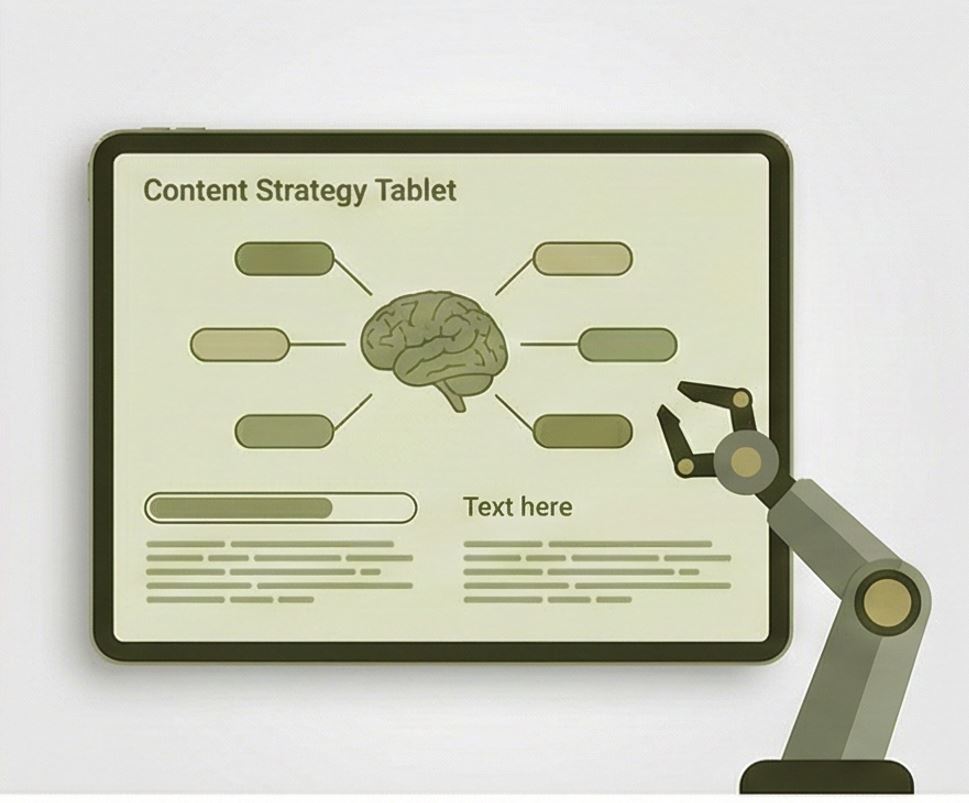
We don’t guess what your patients want. We use data to know for sure. Our AI tools analyze vast amounts of search data in your specific local market to identify high-value opportunities that human researchers miss.
Predictive Patient Modeling
Traditional marketing looks backward at what happened last month. AI marketing looks forward.
We use predictive modeling to identify trends. For example, our data might show a rising local interest in holistic dentistry or a specific type of non-surgical facelift six months before it becomes mainstream. We build your presence around those emerging trends early, so when the wave hits, you are the only established expert in town.
Intent-Based Content Strategy
Stop writing generic blog posts like “5 Tips for Flossing.” Nobody cares, and it doesn’t bring in revenue.
Our AI tools analyze the specific questions patients ask right before they book high-ticket procedures like full mouth reconstruction or robotic surgery. We then craft deeply researched, authoritative content pages that answer those specific “bottom-of-the-funnel” questions better than anyone else.
We use NLP (Natural Language Processing) tools during the writing process. These tools grade our content just like Google’s AI does, ensuring we use the right related terms, answer common follow-up questions, and structure the information in a way machines can easily digest.
Smarter PPC: AI in Google Ads
AI isn’t just for organic search; it has revolutionized paid advertising (PPC). Google Ads is now driven almost entirely by machine learning. If you are manually adjusting bids, you are losing money to competitors using automation.
Automated Bidding Strategies
We feed Google’s advertising AI better data. By connecting your practice management software to Google Ads (in a HIPAA-compliant way), we train the AI to understand what a “booked appointment” looks like.
Instead of just trying to get clicks, the AI learns to show ads only to the people most likely to actually schedule and show up. It adjusts bids in real-time, 24/7, based on the user’s device, location, time of day, and previous search history. A human cannot compete with that speed.
Audience Targeting with AI
We use AI to build “lookalike audiences.” We take the data profile of your best existing patients—the ones who accepted treatment plans and pay on time—and ask the ad platforms to find more people just like them in your local area.
The Zevi AI Advantage:
Supercharging Z-PAP™
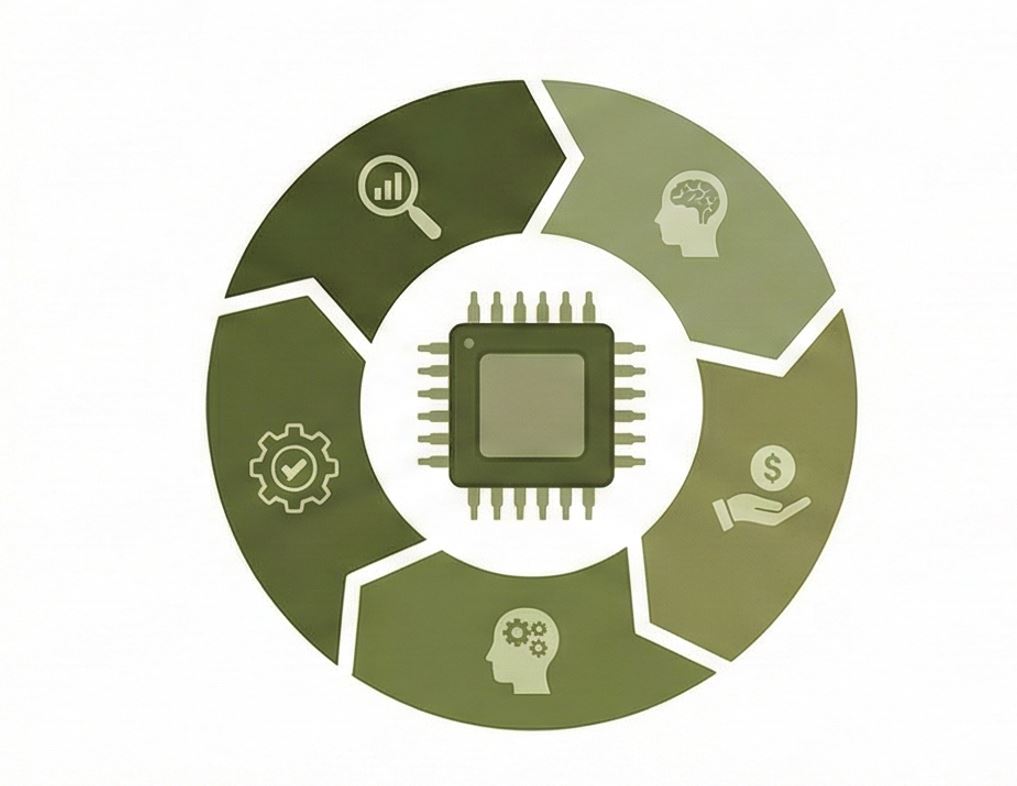
AI is not a separate service we sell. It is the electricity that powers our entire Zevi Patient Acquisition Protocol™ (Z-PAP). Every step of our proven system has been upgraded with artificial intelligence.
AI-Powered Compliance Audit (Step 1)
Instead of a manual checklist, we use AI scanners that crawl your entire digital footprint in minutes, identifying hidden HIPAA risks, ADA accessibility failures, and obscure technical SEO errors that human eyes miss.
AI-Driven Authority SEO (Step 2)
As discussed, we use AI to map out “content clusters” and ensure your site speaks the language of Google’s RankBrain and BERT algorithms, establishing faster topical authority.
AI-Enhanced High-Ticket Conversion (Step 3)
We use AI heatmapping tools on your landing pages that predict user behavior. The AI tells us, “Patients are getting confused at this specific paragraph and leaving.” We then rewrite or redesign that section to remove friction and increase booking rates.
Intelligent Review Automation (Step 4)
Our review systems use basic AI sentiment analysis. If a patient replies to a text with negative words, the system recognizes it’s a poor experience and routes them to a private feedback channel, protecting your public reputation.
Predictive Patient Retention (Step 5)
We use data analysis to predict when a patient is likely due for their next appointment or might be ready for an elective upgrade (like whitening after braces come off), triggering timely, personalized automated messages.
Analytics: Moving from Reporting to Forecasting
The old way of reporting was looking at a PDF once a month showing what happened 30 days ago. That is too slow for today’s market.
As AI experts, we move from “descriptive analytics” (what happened) to “prescriptive analytics” (what should we do next?).
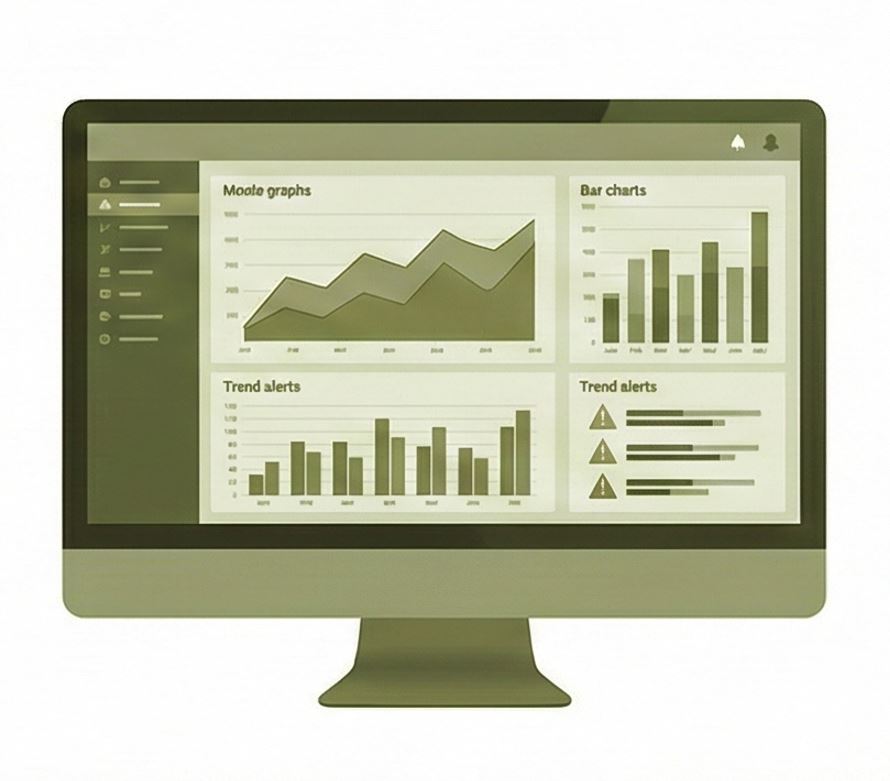
Our dashboards don’t just show you how many calls you got. They show trends. The AI might alert us: “Warning: Competitor X has increased ad spend by 40% on dental implant keywords this week. Recommend increasing budget by 15% to maintain market share.”
This allows us to be proactive rather than reactive, keeping your practice one step ahead of local competition.
LETS TALK
Partner with an Agency That Understands Dentistry
The transition to AI-driven search is not a fad. It is the biggest shift in information retrieval since the invention of the internet itself.
Medical and dental practices that cling to outdated SEO tactics will find themselves fighting over fewer and fewer low-quality leads. Meanwhile, practices that embrace AI will gain a nearly unfair advantage, effortlessly attracting the most informed, high-value patients in their market.
You are an expert in medicine or dentistry. You shouldn’t have to become an expert in artificial intelligence, neural networks, and natural language processing. That is our job.
At Zevi Digital, we handle the complex technology so you can focus on patient care. Let us deploy the power of AI to build the practice you deserve.
No. We use AI as a research assistant and an optimization tool, not a writer. AI helps us find the right topics and structure the information, but expert human medical writers create the final copy to ensure accuracy, empathy, and a professional tone that connects with patients.
Yes, because of how we use it. We use AI to analyze aggregate search trends and public data. We never feed private patient health information (PHI) into public AI models like ChatGPT. Our internal data processes are strictly firewalled and HIPAA compliant.
It can often work faster because we eliminate guessing. Traditional SEO involves a lot of trial and error. AI tools tell us exactly what Google wants based on massive data analysis, allowing us to execute the right strategy the first time. You can often see significant movement in 3-4 months.
Yes. If they are not actively preparing for Google’s Search Generative Experience (SGE) and using NLP optimization, they are using an obsolete playbook. Their methods may still work today, but they will likely fail within the next 12-18 months as Google continues its AI rollout.